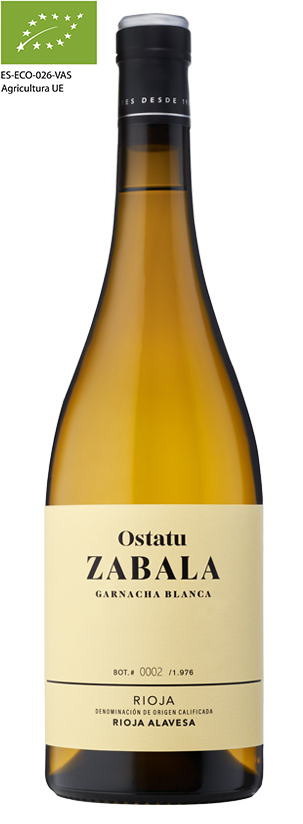

Description
Zabala is a plot located at the limit, as we observe every year since the climatic conditions significantly influence the plant's development (frosts, cold during flowering, etc.), which reduces production compared to the vineyard’s potential. However, excellent levels of fruit ripeness and health are achieved.
In this new project, we decided to work with a variety that, although minority in Rioja Alavesa, has always been part of our territory: the white Garnacha.
A grape that pleasantly surprises us with the vibrancy of its wines and its high acidity, making it ideal for wines with long aging potential in the bottle and barrel.
Vintage
Hand harvested on September 20, 2023.
- Harvest: 2023
- Harvest Rating: Very good
The 2023 vintage was marked by dry and warm weather that encouraged grape ripening and expression. Late-season rains helped balance the vineyard, although they led to a reduced yield. The result is wines of great ripeness and concentration, where freshness is achieved through careful plot selection and altitude. These are powerful, expressive wines with excellent aging potential.
- Bottling Date: July 2024
- Production for the 2023 vintage: 2.406 bottles
- Market Release: March 2026
- Organic certified wine.

Viticulture
Located in the highest area of the Glacis of the Sierra de Cantabria, with a predominance of buried limestone stones and sand
- 100% Garnacha white
- Zabala vineyard, planted in 2016
- Located at 687m altitude
- Double cordon pruning
Winemaking
Elaborated from a careful selection of the best grapes, always harvested by hand.
After a gentle pressing and light racking, the must is fermented in two ovoid concrete tanks (80%) and a large-format barrel (20%), where it remains on its lees for an additional 8 months.
It is then refined in the bottle for more than two years before being released to the market.
Tasting Notes
Zabala is a wine with tension, depth, and structure on the palate, maintaining a marked and fresh acidity.
It clearly reflects the geological complexity and the freshness typical of its altitude.
On the nose, it stands out with notes of fennel and wild thyme, while on the palate, saline nuances, lemon zest, and a creamy touch from its contact with the lees can be appreciated.